

For Property Managers, HOA Boards and Developers
Commercial Tree Service in Plano, TX
You're paying for judgment, not for removals.
What do you actually have on file about the trees on your property? If the answer is a verbal opinion and an invoice, you're holding nothing. We've been documenting Plano-area commercial property since 2005.
Crews dispatch in business hours.
What Sets Us Apart
Sometimes The Right Answer Is To Leave The Tree Alone
Once a tree is down, you have no way to check whether it needed to come down. Neither does the owner asking about the invoice. An assessment that occasionally concludes "this one's fine, watch it next year" is worth more to you than one that always finds something billable, and it's the reason our reports get forwarded rather than filed.
One Point Of Accountability
One contact and one number, and we answer for the outcome regardless of who held the saw. If you manage a portfolio you already coordinate enough specialists. We're not interested in being another one.
We Know The Ordinance Before You Ask
Plano's thresholds, mitigation ratios and submittal requirements, known in advance rather than looked up after a rejection. On development work that's the difference between a clean first-pass approval and losing a review cycle.
None of that's exotic. It's the unglamorous half of the job that decides whether a property manager calls the same company next year, and it's the half most tree companies treat as somebody else's problem. We'd rather be judged on it than on how big a tree we can take down.
The Arborist Who Makes That Call
Taylor Guynes, ISA Certified Arborist TX-433A. We don't employ him, and that's deliberate: his full-time work is urban forestry for a nonprofit, so he arrives at your property with no removals to justify.
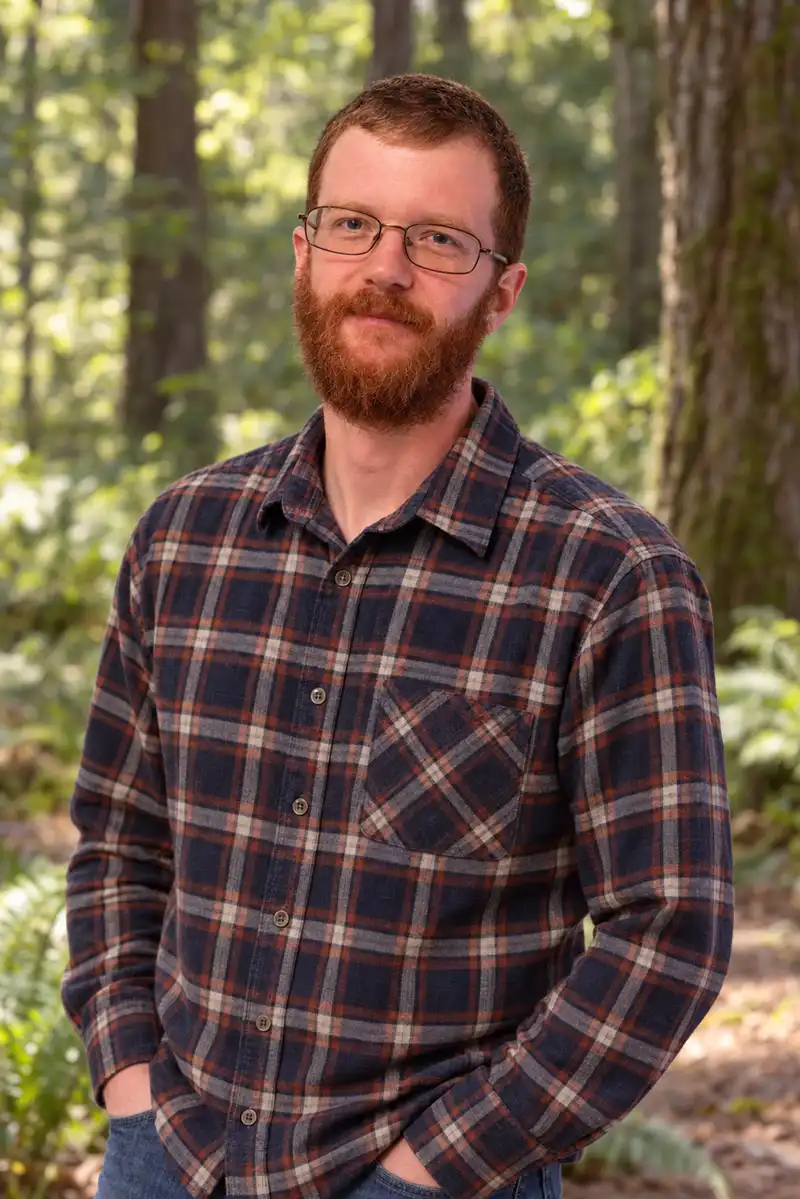
Taylor Guynes
ISA Certified Arborist TX-433A
- ISA Certified ArboristCertificate TX-433A, International Society of Arboriculture
- Bachelor of Science in ForestryTexas A&M University
- Urban Forestry Project ManagerTexas Trees Foundation, since June 2016
- State of the Dallas Urban Forest ReportGathered field data for the report during a 2014 Texas Trees Foundation internship
- Texas A&M Forest ServiceInternship, 2015
- 264 volunteer hours before the degreeAt the Texas Trees Foundation's tree farm on the Richland College campus
Certification is verifiable through the International Society of Arboriculture.
Why Property Managers Call Us
You're Not Managing Trees. You're Managing Liability.
That's the difference between commercial tree work and the residential version of it, and it changes almost everything about how the work should be done. A homeowner wants a tree to look better. You need a walkway that nobody trips on, a fire lane that stays clear, a canopy that doesn't drop a limb onto a tenant's car, and a paper trail proving you acted on what you knew.
Most tree companies will hand you a verbal opinion and an invoice. That's fine for a backyard. The problem on commercial property isn't that the opinion is wrong. It's that you can't do anything with it. You can't file it, you can't forward it to an owner, and you can't hand it to an adjuster.
So when your risk manager asks what condition the tree was in before it failed, or a board asks why the budget line doubled, the honest answer is that somebody told you something once. We write things down because the document is the part you actually keep, and it's the only part that still exists a year later.
The other half of the job is staying invisible while we do it. A crew that blocks the wrong lane at 8:30am, or leaves sawdust across a retail entrance on a Saturday, costs you more in tenant complaints than the tree work saved. So we schedule around your building, we issue insurance certificates before anyone mobilizes, we reopen lanes when we said we would, and we leave the site clean. The measure of a good job here is whether you heard about it from anyone.
- Written Assessments
- COI Before Mobilization
- Scheduled Around Tenants
- Ordinance Documentation
What We Do
Commercial Tree Services in Plano
Everything below is work we do on occupied commercial property: offices, retail centers, HOA common areas, corporate campuses and active construction sites.
Commercial Tree Removal
Large and hazardous removals on occupied commercial property, with lane control and a written scope before we mobilize.
Tree Removal DetailsCommercial Tree Trimming and Pruning
Crown cleaning, thinning, raising and reduction on a schedule that fits your fiscal year, not our calendar.
Trimming and Pruning DetailsEmergency Tree Service
Storm response, road and fire lane clearing, and tree-on-structure extraction. Pre-approved vendor agreements available before the season.
Emergency Response DetailsCrane Assisted Tree Removal
For removals over roofs, parking structures and occupied buildings where rigging alone carries too much risk.
Crane Assisted Removal DetailsCommercial Stump Grinding and Removal
Single and multi-stump grinding, plus full root ball excavation where the area is being rebuilt or repaved.
Stump Grinding DetailsCommercial Tree Cabling and Bracing
Structural support for codominant stems and heavy limbs over walkways, parking and entrances.
Cabling and Bracing DetailsISA Certified Arborist Consulting
Written assessments, tree inventories and risk documentation your risk manager can actually file.
Arborist Consulting DetailsCommercial Tree Health Care
Oak wilt management, pest and disease treatment, deep root fertilization and soil work for North Texas clay.
Tree Health Care DetailsCommercial Land Clearing
Lot clearing, forestry mulching, easement and detention pond clearing for site development.
Land Clearing DetailsTree Survey and Preservation Plans
Ordinance compliance documentation for redevelopment, including protection fencing and mitigation planning.
Survey and Preservation DetailsBefore You Hire Anybody
Four Things We'll Commit To In Advance
Not a rating somebody was asked for. Things you can hold us to, and the reason to ask any contractor for the same list.
We work on commercial property only. Not as a preference, as a scope. The equipment, the insurance, the scheduling and the paperwork are set up for occupied sites with tenants, boards and fire lanes, and a company doing both commercial and residential is optimized for neither.
Estimates are always free, and so is the arborist time inside a bid. Where an estimate needs an arborist to be worth anything, that's priced case by case. But if we're bidding to win the work and the job needs one, we cover it. You should never be paying us to prepare our own bid proposal.
Same day for an emergency, and within 24 hours at the latest. That's a good faith estimate rather than a promise, and the distinction is deliberate: during a regional storm anybody quoting you a guaranteed number is guessing, because a system crossing the county puts every commercial property in line at once.
We call 15 to 30 minutes before we arrive. Every time. It sounds small and it's the difference between a manager who can move two cars and warn a tenant, and one who finds out a crew is on site when somebody complains about it.
How We Engage With You
What Working With Us Actually Looks Like
Built around the way property gets approved and budgeted, not around getting a signature today. Nothing here asks you to decide faster than your process allows.
We Walk The Property
An arborist walks the site with you, or without you if that's easier, and looks at every tree that could affect a person, a vehicle, a structure or a lane.
You Get It In Writing
Condition, risk, and what we'd recommend doing about it, with priorities separated from nice-to-haves so you can budget in phases if you need to.
Insurance Clears First
Certificates are issued to your entity with the limits your owner requires, before a truck moves. If our coverage doesn't meet your threshold, you'll know immediately.
We Work Around You
Scheduled for your building's quiet hours. Lanes reopened when promised, site clean at end of day, and a completion record for your file.
We're Responsible For The Outcome
You get one contact and one number, and we're fully responsible for the outcome. When something needs settling, you're not working out who to call.
We'll Write The Scope Before We Quote It
Most commercial work over a threshold needs three bids, and a tree quote is hard to hold anybody to, because a price without a specification doesn't say what's actually being done.
So the specification comes first: condition, access, staging, lane closures and cleanup, written down before anybody puts a price on it. You own that document. It's what lets you take a number into a budget meeting and defend it, and it's why the scope you approved is the scope that gets delivered.
What Moves The Number
The honest answer is that access drives it more than size does. A large tree with a clear drop zone and somewhere to put a chipper is often cheaper than a smaller one over a roof or a parking deck, because the second has to come apart in controlled pieces. After that it's timing and cleanup: work outside business hours costs more than work during them, and full stump grinding costs more than a flush cut.
We'd rather show you those choices than bury them in one number, which also means a quote from us can be compared line by line against anyone else's.
Who We Work For
Different Clients, Different Challenges.
A property manager and a civil engineer both need a tree company, but they're facing completely different challenges. Here's how the work changes depending on which one you are.
Commercial Property Managers
You hold a portfolio, not a property. One walkthrough can cover every site you manage, one number answers for all of it, and the reporting arrives in a form you can forward to an owner without rewriting it.
HOA Boards And Community Managers
Common area canopy, a board that has to vote, and residents who notice everything. We write scopes a board can approve without an arborist in the room, and we schedule so nobody wakes up to a chipper.
Developers, GCs And Civil Engineers.
Plano's Section 17.800.2 covers redevelopment as well as raw land. We produce the survey, preservation plan and protection fencing the city expects, usually while the site plan is still being drawn.
Corporate Campuses And Institutions
Large canopy, narrow access windows, and a facilities team that answers to a lot of people. Work happens around your calendar, and the documentation is built to be filed rather than skimmed.
Retail Centers
Sightlines to signage, fire lanes that stay clear, and a parking lot canopy that doesn't drop limbs onto customer cars. Saturday is generally off the table and we plan around that.
Industrial And Warehouse
Truck routes, dock approaches and drainage easements have to stay usable. We work around your traffic pattern instead of parking a chipper across it.
Municipal And Public Sector
Formal procurement, documentation that survives an audit, and payment terms that stretch to net-60 or net-90 without it becoming a problem.
A board vote, a three-bid requirement and a permit deadline each need a different thing from us, and knowing which one you're facing is most of doing the job well.
Plano Specifically
Tree Problems Here Follow The Map Of When Things Were Built
Plano developed east to west, and commercial tree age runs the same direction. Properties built in the late seventies and eighties have trees that are now forty to fifty years old, which is exactly the age when codominant stems start to fail, root plates shift in our clay, and post oaks go into decline. That's the recurring work: cabling, removal, risk assessment and plant health care, on the same properties year after year.
You can see it along the US-75 corridor, in the older Preston Road retail, through the Park Boulevard centers, and in the strip centers along Coit, Custer and Alma. Downtown Plano and the Arts District hold the oldest commercial stock in the city. Willow Bend is newer but its canopy is hitting twenty-five years, which is when structural attention starts to matter.
Then there's the other Plano, the one under construction. The Park at Legacy, the AT&T campus on the old EDS site, Collin Creek Mall running through 2028, Assembly Park and the continued Granite Park build-out. That's a completely different job. Section 17.800.2 of the city code applies to vacant and undeveloped property and to property being redeveloped, including additions and alterations, so tree surveys, preservation plans, protection fencing and mitigation follow the bulldozers. Usually the civil engineer preparing the site plan decides who produces that survey, not the eventual owner.
"If your property went up in the eighties, your canopy is reaching the age where things start to fail. If it went up ten years ago, it needs establishment care and not much else."
That distinction decides what you should be spending. A ten-year-old canopy, the kind you'll find around Legacy West, needs water, structural pruning while the branches are still small enough to correct cheaply, and very little beyond that for another decade. If you're looking at an ambitious maintenance program on trees that young, the age of the canopy is the check worth running before you approve it.
The same budget on a forty-year-old canopy along US-75 buys something else entirely: risk assessment, cabling on the stems worth saving, and staged removal of the ones that aren't. There the spending isn't optional, it's deferred. Knowing which of those two properties you actually have is most of knowing what to put in next year's budget.
One shift worth watching, because it changes what your property needs: office vacancy is pushing owners of older Plano product toward repositioning or redevelopment. The moment that decision gets made, your tree work stops being routine maintenance and becomes an ordinance and permitting problem. We work on both sides of that line, so the change doesn't cost you a vendor search at the worst possible moment.

Who We Usually Work With
- Commercial property managers and CRE asset managers
- HOA boards and community association managers
- Developers, general contractors and civil engineering firms
- Corporate campuses and institutional facilities
- Cities, school districts and other public sector property
Emergency And Storm Response
When A Limb Comes Down At 2am, The Vendor List Matters More Than The Phone Book.
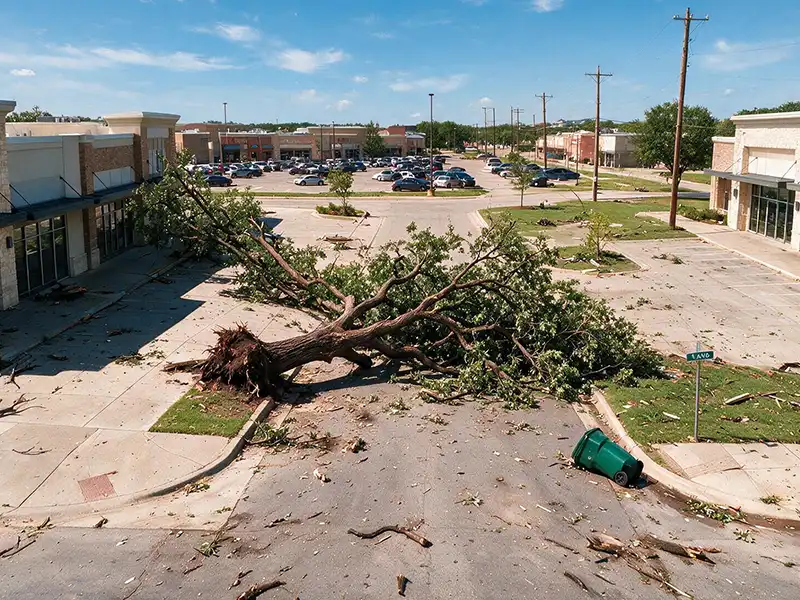
North Texas storms don't schedule themselves around your fiscal year. When one comes through, the properties that recover fastest are the ones that already had a tree vendor on the approved list, with insurance on file and a signed agreement waiting.
We clear fallen trees and hanging limbs, reopen access and fire lanes, extract trees off structures, and document the damage while it's still there to photograph, which is the part your insurer will ask about later. If you'd rather not be sorting out paperwork during an outage, we can get set up as a pre-approved emergency vendor now, before the season.
Frequently Asked Questions
We're insured and bonded, and we issue certificates of insurance naming your entity before anyone mobilizes. Tell us the limits your owner or management company requires and we'll confirm in writing whether we meet them before you spend any more time on us.
How fast we reach your Plano property after a storm depends mostly on how widespread the storm was, because a system that hits all of Collin County puts every commercial property in line at once. You'll reach a person rather than a voicemail box. What we can tell you honestly is that properties with a vendor agreement already in place get dispatched first, since there's no paperwork to sort out before we roll. If storm response matters to your property, the useful move is setting that up before the season, not during an outage. We cover Collin, Dallas and Denton Counties, and the cities we work in each regulate trees differently.
Every tree that could affect a person, a vehicle, a structure or a drive lane, with its condition, the specific defect if there's one, and what we'd recommend doing about it. Recommendations are separated into what needs attention now and what can wait, so you can phase the work across budget cycles instead of approving it all at once. It's written to be filed and handed to somebody else, because that's usually where it ends up: with a risk manager, an insurer, or a board that wasn't on the walkthrough. There's more on tree risk and documentation if you want to see what each document is for.
Yes, and it's most of the job on an occupied property. We schedule around your building's quiet hours, stage equipment where it won't block access, keep fire lanes clear or coordinate closures in advance, and clean the site before we leave. A crew that generates tenant complaints costs you more than the tree work saved, so we treat that as the actual deliverable.
Usually, yes. Plano's tree preservation requirements under Section 17.800.2 apply to vacant and undeveloped property and to property being redeveloped, including additions and alterations, so a survey and preservation plan typically come into play well before demolition. The practical detail most people miss is timing: the survey normally needs to exist while the site plan is being prepared, which means the civil engineer usually needs it before the owner has thought about trees at all. Send us the site plan and we'll tell you what the city will want. Our tree ordinance and compliance pages cover what each city requires.
On Plano commercial property it's usually age plus soil. A lot of the commercial stock along US-75 and the older Preston and Park corridors was built in the late seventies and eighties, so those trees are now forty to fifty years old, which is exactly when codominant stems start failing and root plates shift in North Texas clay. Post oaks in particular don't tolerate the grade changes, compaction and irrigation that come with parking lots and landscaping. Oak wilt is the other common cause and it spreads through connected root systems, so it's worth diagnosing rather than assuming. We've written up oak wilt separately, including what it looks like and when pruning is safe.
A tree service does the work. An arborist is trained to diagnose the tree and is certified to say what it needs and why. Plenty of people also say tree surgeon, and it means the same trade. For commercial property the distinction that actually matters isn't the job title, it's whether the person assessing your trees can produce a written risk assessment your insurer and your board will accept. We do both parts, which is why the report and the crew come from the same place. That one and several others are answered at length in our commercial tree questions.
Often, but it usually depends on what the tree hit rather than the tree itself. Policies commonly cover removal when a tree damages a covered structure, and commonly exclude it when the tree simply fell in a landscaped area and hurt nothing. That's exactly why we photograph and document the damage before we start clearing it: once the tree is chipped and hauled, the evidence your adjuster wants is gone. We give you that documentation whether or not you end up filing.
It depends on how many trees are in scope and how much detail you need. A walkthrough of a single property with a written summary is a different job from a full inventory where every tree is tagged, measured and tracked. Tell us the property size and what the report is for, whether that's a board, an insurer, a lender or a permit, and we'll quote it before we start.
For commercial property it's normally settled by the lease rather than by statute, and on most commercial leases tree and grounds maintenance sits with the landlord or gets passed through as a common area expense. Where it gets expensive is liability: if a tree was visibly defective and nobody acted, the fact that it was ignored tends to matter more than whose line item it was. This is general information rather than legal advice, so check your lease and your counsel. What we can do is give you the written record showing the condition was identified and addressed.
Yes. Portfolio and multi-site contracts are a large part of what we do, including annual canopy walkthroughs with a written report per property, so budgeting stops being guesswork. One contact and one number covers every site, which is generally the point. What changes between them is the client rather than the trees, which is why we write for each kind of property separately.
By the scope and the access, not by a per-tree rate card. A removal in an open lawn and the same tree over an occupied parking structure are different jobs, because one needs a crane, lane closures and rigging over things that break. We quote in writing after seeing the property, with the scope itemized so you can compare it against another bid line by line, which matters if you're required to collect three. The scope depends on which of our commercial tree services the property actually needs.
Yes, and it's the single best thing a property manager can do before storm season. We'll provide insurance certificates, W-9, references and whatever your procurement process requires, so the approval happens on a normal Tuesday instead of during an emergency. Then when something comes down, the call is a dispatch rather than a vendor search.
We haul it off as part of the job and leave the site clean. If you want the chips kept on site for beds or trails, say so and we'll leave them where you want them.
We'll take it, but it isn't what we're built for. Our crews, equipment and paperwork are set up for occupied commercial property, HOA common areas and construction sites. If you have a tree at home, we can help, and you may also be perfectly well served by a good residential company.
Where To Start
Three Ways To Begin, None Of Them Urgent.
Commercial decisions take the time they take. Pick whichever of these fits where you actually are, including the one that costs you nothing and commits you to nothing.
Something Is Wrong Now
Call. You'll reach a person at any hour. We respond immediately during business hours, and first thing the next morning if you call overnight.
You Want To Know What You Have
Book a walkthrough. An arborist walks the property, you get the condition in writing, and the estimate costs you nothing.
Nothing Is Wrong Yet
Get on file before the season. Properties we already hold move faster on a storm night, because the crew isn't spending the first hour learning the site.
We work on commercial property only, we're fully responsible for the outcome, and we call 15 to 30 minutes before we arrive. The insurance clears before a truck moves, which is the third step above rather than a promise made at the end.
Legacy Tree Care, Plano, TX. Serving commercial property across Collin, Dallas and Denton Counties since 2005. (214) 668-8346.